2025
RCI, UNDSA, and UNECA Discussed Social Protection and Poverty Reduction Linkages
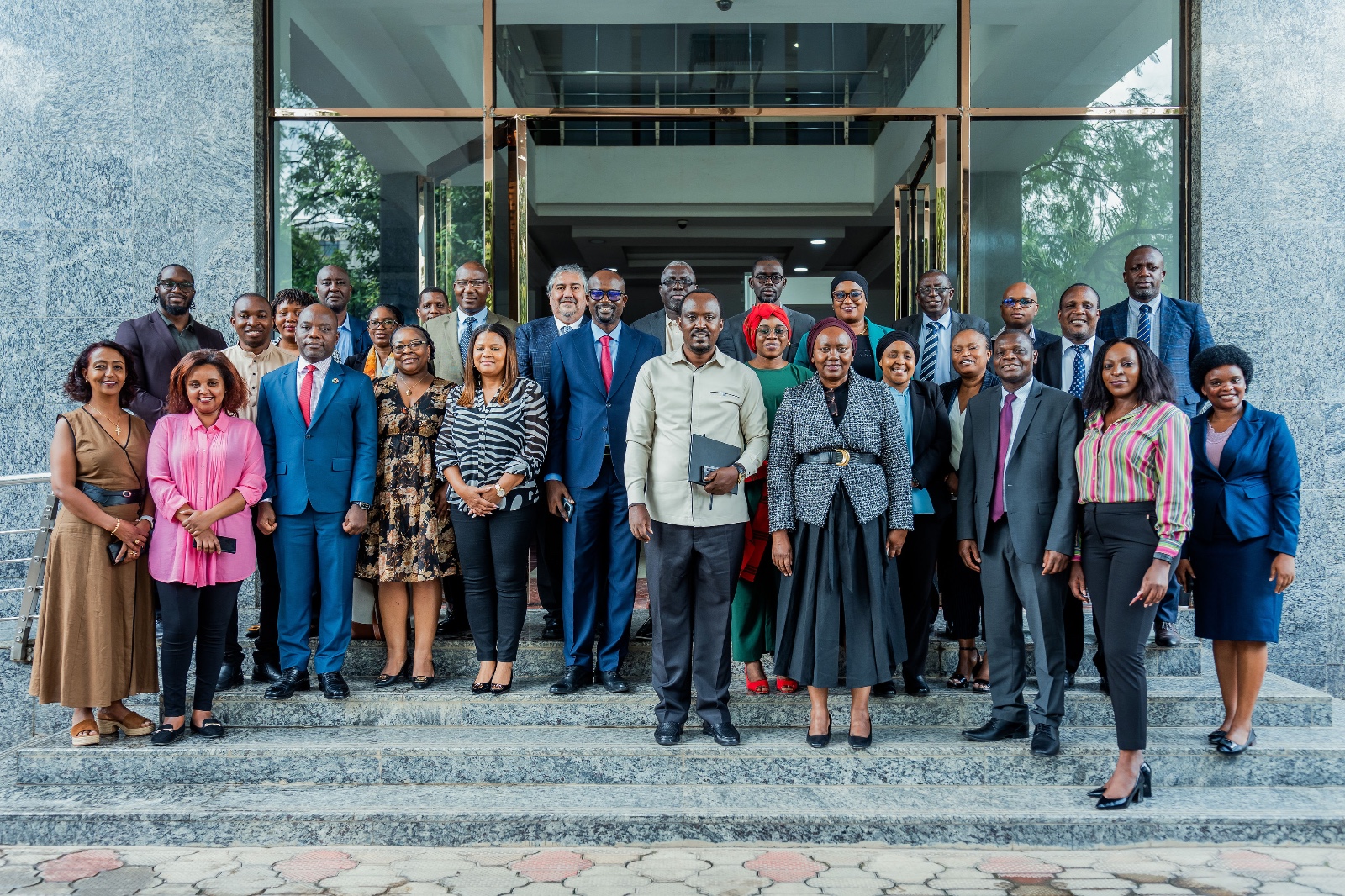
The discussions took place during a high-level Study Tour for government officials from Namibia, Senegal, Tanzania, and Zambia. The tour, which ran from November 10th to 15th, 2025, is focused on "Strengthening Capacity for evidence-based Social Protection Policies for responding to the triple global crisis in fuel, food, and finance".
The delegation also includes senior policymakers from the four non-African nations, Cambodia and the Maldives, and the UN representatives. Participants come from ministries responsible for social protection, labour, youth, employment, and gender, aiming to strengthen social protection systems.
Learning from Rwanda's Resilience and Transformation
Mr. Amson Sibanda of UNDESA, Chief of the National Strategies and Capacity Building Branch, delivered the opening remarks by thanking RCI and the Ministry of Local Government for hosting the high-level study tour.
Mr. Sibanda stated that Rwanda is cited as one of the best-performing countries in implementing its national development Vision 2050, noting that since 2001, Rwanda has sustained an average of 8% economic growth per annum and achieved a "development hat-trick" of high economic growth, significant poverty reduction, and decreased inequality.
He highlighted that Rwanda offers a compelling case study in how social protection schemes, including targeted interventions like the Vision 2020 Umurenge Programme (VUP) and the Imibereho dynamic social registry, can uplift vulnerable populations and foster sustainable growth.
RCI’s Insights and Critical Objectives
The main objective of the study tour is to equip policymakers and practitioners with the knowledge and skills to design, fund, and implement social protection systems. Dr. Willy Mugenzi, RCI's Chief Operating Officer (COO), presented RCI’s role in knowledge sharing through South-South Cooperation, highlighting Rwanda's firm beliefs: that Global South countries share many similarities, and that the exchange of know-how, competencies, and successes is the best foundation for long-lasting transformation. Dr. Mugenzi's presentation provided statistics reinforcing Rwanda's transformation, including:
. A reduction in the level of poverty from 60.4% in 2001 to 27.4% in 2024.
. An increase in life expectancy from 26 years in 1995 to 70.2 years in 2024.
. Health insurance coverage for 85.3% of the population in 2024.
. A surge in financial inclusion from 47% in 2010 to 96% in 2024.
The question and answer session centered on Rwanda’s transformational journey: discovered secrets for success, challenges, and lessons learned worth sharing with other countries in Africa and beyond. Rwanda’s Homegrown Solutions were cited and acknowledged as critical success factors for Rwanda’s holistic transformation after the 1994 Genocide against Tutsi.
“While financing from any source is vital, much of Rwanda’s transformational change happened because of using readily available cultural resources, a shift in mindset, and effective use of resources from Rwandans and development partners,” Mugenzi responded to the question related to the role of external financing in Rwanda’s unprecedented transformation.
Delegates engaged with key institutions to understand the systems that underpin Rwanda’s success, including the Ministry of Local Government (MINALOC), the Local Administrative Entities Development Agency (LODA), the Rwanda Governance Board (RGB), and the Ministry of Finance and Economic Planning (MINECOFIN).
Mr. Sibanda encouraged participants to "ask questions, challenge assumptions, and reflect on how these lessons might apply in your own national contexts," concluding that “the tour is designed not just to inform, but to inspire.”
Published: December 08, 2025
By: Paradis Mukundwa
Share