2026
Rwanda Cooperation April Highlights
Each year, from April 7, Rwanda enters a national period of remembrance to honor the victims of the 1994 Genocide against the Tutsi, in which over one million people were killed in just 100 days. It marks one of the darkest chapters in the country’s history, following years of division and discrimination that culminated in the genocide and left the nation devastated and its institutions destroyed. This time serves as an opportunity to reflect on the past and reaffirm a shared commitment to the national unity and resilience of Rwandans.
In the followed years, Rwanda embarked on a remarkable journey of recovery, driven by strong leadership and the collective will of its people. Through the promotion of unity and reconciliation, alongside homegrown solutions such as the Gacaca courts which, between 2002 and 2012 (10 years), tried approximately 1,958,634 genocide-related cases, including crimes against persons and properties. This community-based justice approach also inspired other local mechanisms for dispute resolution, including mediation structures such as Abunzi committees, which continue to promote peaceful settlement of conflicts at the grassroots level. Together, these initiatives fostered justice, healing, and social cohesion across the nation.
Rwanda has since rebuilt itself into a model of inclusive development and effective governance. Today, its transformation continues to inspire many nations seeking practical, experience-based solutions.
Within this context, Rwanda Cooperation shares this progress by promoting knowledge exchange and positioning Rwanda as a hub for development learning through South-South and triangular cooperation.
Rwanda Cooperation Welcomes Global Delegations
Throughout April, Rwanda Cooperation hosted delegations from across Africa and beyond for study visits and technical exchanges:
Republic of Sudan: Rwanda Cooperation welcomed the Deputy Ambassador of Sudan for discussions focused on initiating South-South Cooperation, with an emphasis on structured training programs and institutional knowledge exchange.
Federal Republic of Nigeria: Two delegations received from Nigeria, including ICONUM Consulting Agency and representatives from Ondo State Government. The engagements covered social security systems, public audit, decentralized governance, performance management (Imihigo), and urban development, offering practical insights into Rwanda’s governance and service delivery approaches. Since 2018, RCI has hosted 71 delegations and 1,284 delegates from Nigeria.
Kingdom of Eswatini: Rwanda Cooperation welcomed two delegations from Eswatini, including the Ministry of Finance & ESEPARC, which focused on State-Owned Enterprise governance and public investment management, and the Eswatini Revenue Services, which engaged on Competency-Based Human Resource Management to strengthen institutional performance and accountability. Since 2018, RCI has hosted 30 delegations and 258 delegates from Eswatini.
Republic of Ghana: A delegation from Accra Technical University engaged in exchanges on higher education systems, including accreditation frameworks, financing models, and innovative approaches to digital learning and curriculum development. Since 2018, RCI has hosted 19 delegations with 184 delegates from Ghana.
Islamic Republic of Mauritania: The TAAZOUR delegation explored Rwanda’s integrated social protection systems, focusing on the Social Registry, digital data integration, and data-driven targeting mechanisms. Since 2018, Rwanda Cooperation RCI 3 delegations and 20 delegates from Mauritania.
Republic of Malawi: A delegation from the Ministry of Health and Sanitation examined Rwanda’s use of digital tools in strengthening integrated health systems and improving service delivery. Since 2018, RCI has hosted 30 delegations and 256 delegates from Malawi.
Republic of Senegal & Republic of Côte d’Ivoire: A high-level delegation from GIM-UEMOA explored Rwanda’s advancements in financial innovation and digital transformation, particularly in modernizing payment systems and financial infrastructure. Since 2018, RCI has hosted 19 delegations and 184 delegates from Senegal, and 26 delegations and 211 delegates from Côte d’Ivoire.
Republic of Zambia: Rwanda Cooperation welcomed a delegation from the Zambia Patents and Companies Registration Agency (PACRA), focusing on digital business infrastructure and the evolution of technical skills to support economic development. Since 2018, RCI has hosted 26 delegations and 310 delegates from Zambia.
Federal Democratic Republic of Ethiopia: Rwanda Cooperation hosted a delegation from the Ministry of Labor and Skills, engaging in discussions on skills development, institutional strengthening, and sustainable economic growth. Since 2018, RCI has hosted 30 delegations and 354 delegates from Ethiopia.
Extending Cooperation Beyond Borders
The Government of Rwanda, through Rwanda Cooperation Initiative, in partnership with the Government of Jamaica, officially commenced a strategic mission to implement an Integrated Electronic Case Management System (IECMS) project.
As part of this initiative, the Ministry of Justice and Constitutional Affairs of Jamaica welcomed a delegation facilitated by Rwanda Cooperation to conduct a needs assessment across the justice sector. This three-year phased project, signed in November 2025, aims to modernize Jamaica’s justice system by digitally connecting courts and key stakeholders, enhancing efficiency, transparency, and access to justice.
Leadership Transition: A New Chapter
Rwanda Cooperation marked a leadership transition, with Eng. Patricie Uwase handing over to Richard Niwenshuti as CEO during a ceremony witnessed by Fidelis Mironko, Permanent Secretary at the Ministry of Foreign Affairs and International Cooperation. The transition also included Dr. Willy Mugenzi handing over Chief Operations Officer responsibilities to Chance Tubane.
The new leadership reaffirmed its commitment to strengthening Rwanda’s global knowledge-sharing agenda and advancing South-South and triangular cooperation through technical exchange, study visits, and development partnerships.
Kwibuka 32: A Shared Moment of Remembrance
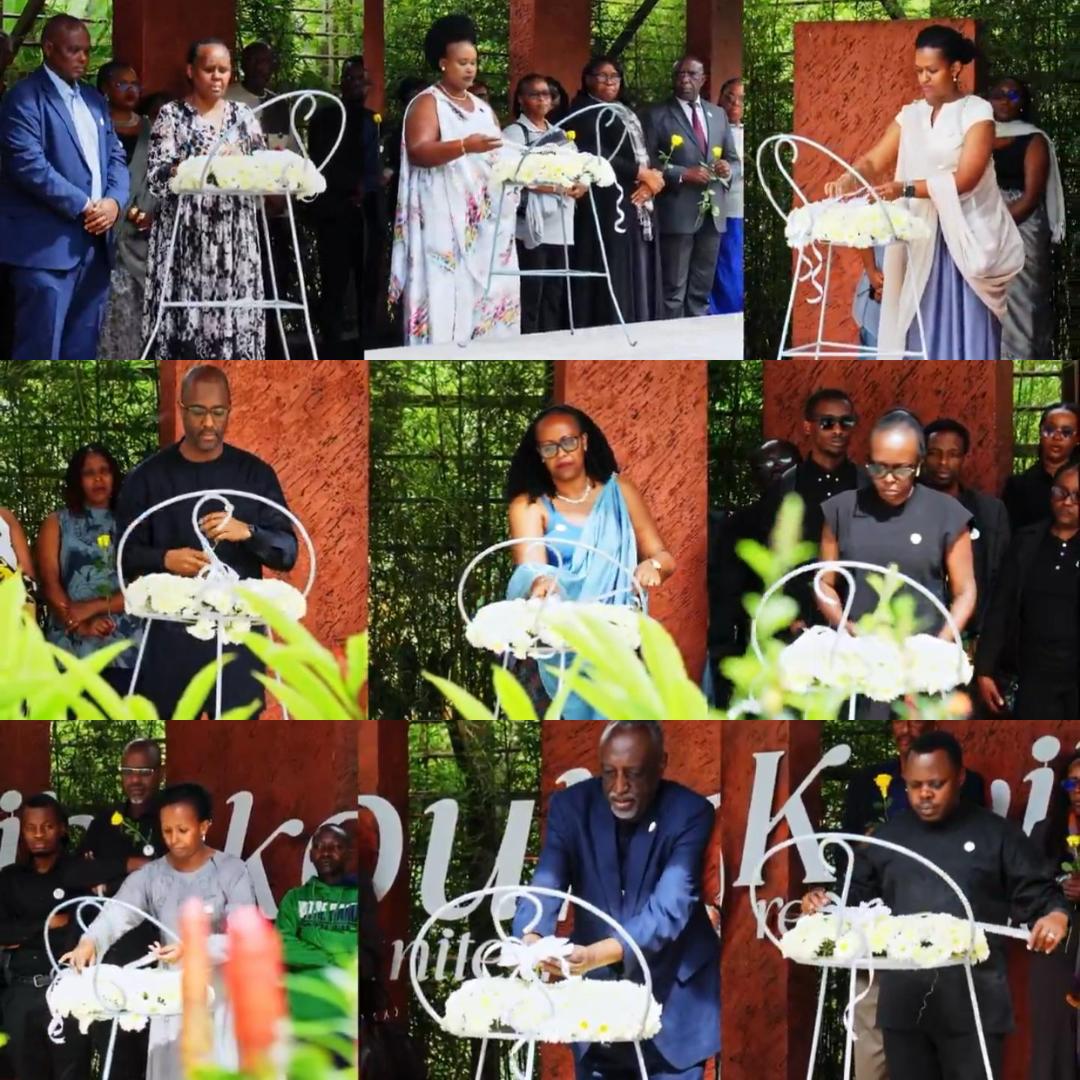
Rwanda Cooperation joined institutions working in A&P building including the Ministry of Gender and Family Promotion, the Ministry of Youth and Arts, the National Child Development Agency, the Rwanda Elders Advisory Forum, the National Public Service Commission, the YouthConnekt, the National Women’s Council, National Cyber Security Authority, and IBUKA representative in commemorating Kwibuka 32 at the Kigali Genocide Memorial, where over 250,000 victims are laid to rest.
The commemoration was presided over by the Minister of Gender and Family Promotion, who delivered the keynote address. Participants paid tributes and reflections on the Genocide against the Tutsi, reaffirming commitment to unity, remembrance, and combating genocide ideology.
Published: May 01, 2026
By: Rwanda Cooperation
Share